The benefits of physical education and how this can promote a child’s well being in primary education.
Hello Bloggers,
This blog will explore the benefits of physical
education and how this can promote a child’s well being in primary
education.
“Well-being
is a crucial core element of the work of the educational settings” (DCELLS,
2010). This highlights the importance of the teacher’s role in influencing
activities in primary schools to promote children’s well-being. Kirsty Williams
the cabinet secretary for Education further supports this statement by stating
how teacher’s are at the frontline of recognising changes in a child’s health
and well-being (Welsh Government, 2017). One of the main health benefits in
primary schools today to enhance well-being is the influence of physical
education. Ginsburg,
(2007); Pellegrini, Dupuis, & Smith, (2007); Rigby & Rodger (2006)
all state how engagement in physical activity allows and provides children with
opportunities to develop a broad range of skills which link with physical,
social and emotional well-being. Physically,
children have the freedom to run around, keep fit and play which improves
strength and flexibility. Also, bones become stronger, a child has a much
better outlook on life as health is improved and a child is likely to become
overweight (Bouchard, 1993). Many suggestions have been made on how physical
education should be given the same status and priority as maths, English and
science to tackle obesity (The guardian, 2018). Yet, the major concern for
Wales is that despite physical education being influenced across society,
obesity is still at its highest (BBC, 2018). Not only does this cause of serious risk of
health problems for children, it also negatively affects their overall
well-being. Children and young people who are overweight can experience
victimisation, discrimination and teasing by their peers, which can contribute
to poor peer relationships, school experience and psychological wellbeing. Research
shows how obesity has been associated with low-self esteem in children such as
mental health problems such as anxiety, stress and loneliness (Morten et al, 2012). This is why it is
extremely important for exercise to be influenced in primary schools. Yet, more
importantly to have a balance,
Donaldson is now tackling this at a very young
age in education, to improve health and well-being of the nation, which is
beginning in schools. This is seen in the Donaldson’s report, ‘Successful
Futures’ with the curriculum soon to be implemented in primary schools across
Wales (Donaldson, 2015). The review has a positive influence on health and
well-being, which will play a core role in education. One of the 4 purposes of
the review influences children to become, “healthy, confident individuals” who
are ready to achieve in today’s society, to promote a child to focus on “themselves”
and “their well-being”(Donaldson,2015). Exercise such as Yoga is being used in
schools today, this form of exercise can promote a child’s confidence and
fitness. It is used to improve flexibility, reduce stress and address many
physical and mental health challenges (Bertzeletos, 2018).
Although Jin et al (2016)
notes how it is unclear whether or not yoga can improve overall well-being, however,
it has been proved to reduce stress and this can lead to a positive beginning. The
six areas of learning in the Donaldson’s review focuses on physical education
as more of a holistic approach to well-being, instead of being taught in silo
subjects, this benefits children as it prepares citizens for the future (Donaldson,
2015).
Physical
education leads to benefits beyond physical health, which include improvements
in problem-solving skills, social relationships, and emotional well-being (Burdette and Whitaker, 2005). Children have the opportunity to socialise
and make new friends in a new environment whilst being active. This can push
children to join clubs and sport activities such as dancing, football, netball
and many more which can also teach team work. Lu and Buchanan (2014) highlight how social interaction and meeting new people
can benefit well-being as emotions are shared between friends. Theorist Alfred
Adler supported this statement by noting how the development of social interest
was crucial to good health, how this leads to successful relationships in the
family, work, and overall future. A child is able to successfully meet life’s
challenges due to and through the quality connection of others (Adler, 2017). However,
there is a concern in the growing number of children who have lost connection to
the outdoors and exercise, who spend more time indoors due to technology and
the world of media, despite knowing the health benefits (Klesges, et al. 1990, Louv, 2008).
There
are many issues in today’s society with obesity, depression, body image and
anxiety which are mainly linked to the world of media. With social media playing such a big
part in today’s society, it is evident that many people spend a lot of time
online, which can sacrifice mental health and well-being. A report from the BBC
highlights how magazines and television programmes are often blamed for
portraying an ideal body image, which can cause people to question themselves
and lose self-esteem and confidence in themselves (Roxby, 2014). For many young people growing up today, social media such as instagram
and facebook have provided pictures and news which are unrealistic and idealistic.
Many young people refer to these images as a form of comparison which can
create harmful and dangerous circumstances (Richins, 2014). This can negatively impact on young
people’s well-being as they can become depressed, this can lead to young people limiting what they eat to try
and fit in, or even excessive eating. However, there are many programmes in
place to try and prevent and resolve this from becoming an even bigger issue.
An example of this is called the Loud Education, a group of young people who
have experienced these circumstances, who go into schools to talk to pupils and
train teachers on how to deal with body confidence issues. Programmes like
these are very beneficial and can lead to a very positive outcome on children’s
health and well-being (Hibberd, 2018). This is why being active in education is
important as it offers a suitable and appropriate environment where children
can learn to regulate a variety of emotions (Tieerdsma, 1999).
I try to be as active as I can by joining running
sessions and joining the gym, as I understand the importance it has on my
well-being and health. And in university we were able to express this as we took
part in a dance lesson as part of our AOLE session, where we focused on keeping
fit and healthy while having fun. We were set in groups of five, as a challenge
I decided to join a group of girls that I do normally socialise with as much as
others. As a team we created a 10 minute dance routine which contained a lot of
laughter and joy, I also had the opportunity to make new friends. This activity
positively increased my confidence as I was able to express myself in a dance
routine in front of the whole class room. White (2009) highlights the
importance of getting out of the comfort zone and expressing yourself in front
of others as this has an impact on self-esteem self-worth. Austin (2000)
similarly notes how children who collaboratively express themselves have a
deeper understanding of one another, which positively impacts their confidence
as they have the opportunity to get to know one another by sharing the same
interests. Social interaction is influenced by Vygotsky (1978) theory as he
highlights how social interaction between one another was at the core of a
child’s development process. Which is still relevant in today’s education. I soon
became non-stressed and felt better and proud of my-self once I realised we
were all in the same situation, which suggests how this experience would be
very useful for future teaching for children. The only issue with this activity
would be that some children could find it more difficult than others to join in,
as it took courage for myself to be able to dance in front of everyone, some
students did not participate and this could also happen with children. This is
why it is important for teachers to be enthusiastic and to join in, this will
engage and motivate the children more, which happened in our activity as both
lecturers took part – which made it fun for all of us students.
https://www.youtube.com/watch?v=utuPQRXf-Sw – This video
highlights the importance of being active in primary schools. It is a campaign
called ‘active at school’, which ensures children have 1 hour of exercise a day
and shows how this has significant benefits on their health and well-being.
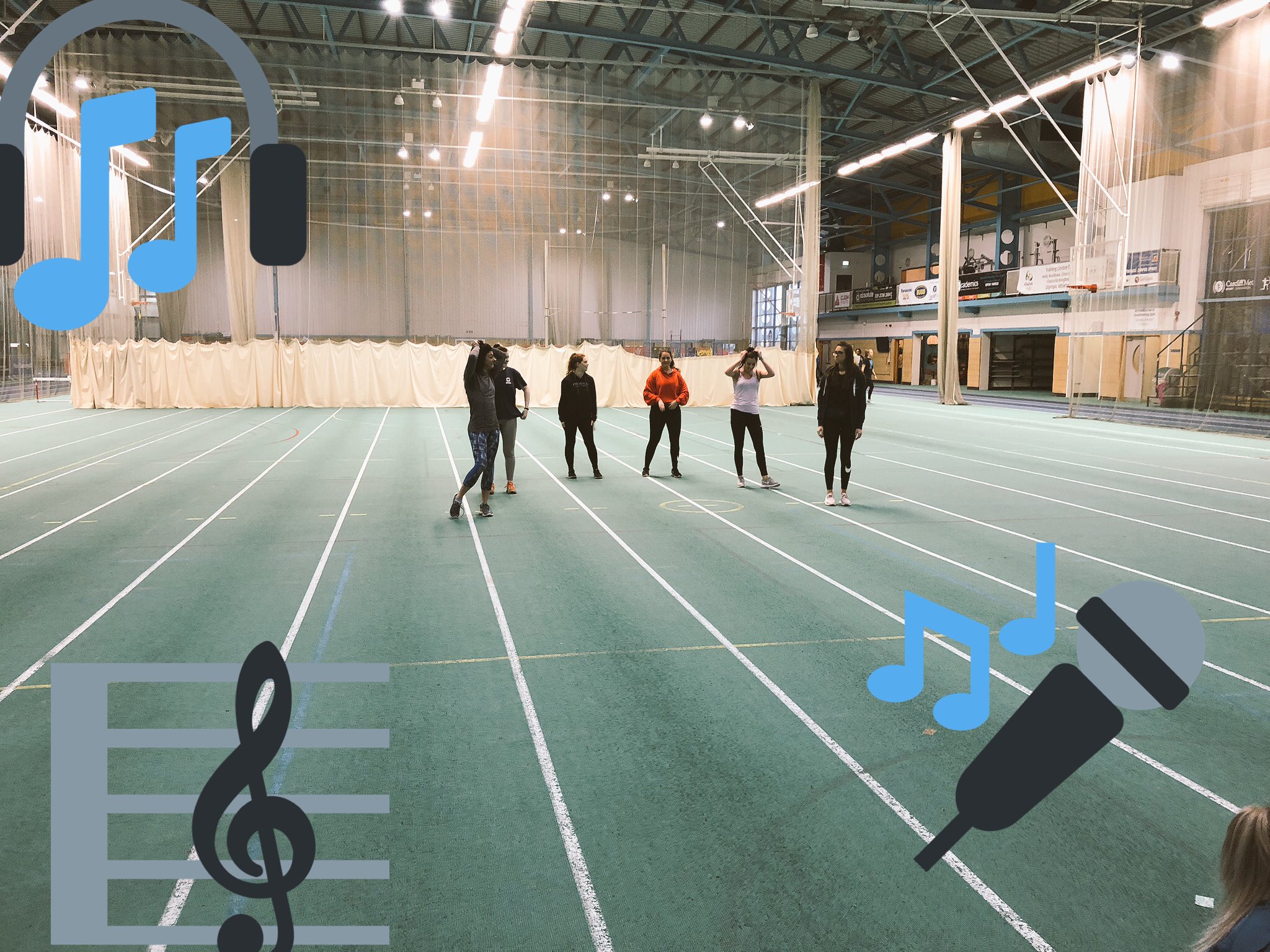
Preparing ourselves for the dance!!
Reference
List
Adler,
A. (2017) Alfred Adler: Theory and Application. Available at: http://alfredadler.edu/about/alfred-adler-theory-application (Accessed:
04 April 2018).
Austin, J. E. (2000) ‘Principles for Partnership, Journal of Leader to Leader’, 18 (2),
pp. 44-50.
BBC News. (2018)
Welsh health survey:
57% of adults overweight or obese. Available at: http://www.bbc.co.uk/news/uk-wales-19659074
(Accessed 10 April 2018)
Benefits
of Yoga. Available at: https://static1.squarespace.com/static/58d941f7e3df283d54d5c1e5/t/5a5271700d9297f9a5978fa8/1515352441658/Health+Benefits+of+Yoga.pdf (Accessed:
03 April 2018).
Bertzeletos, B. (2018) Evidence Based Research Clearly Demonstrates
the Remarkable Health.
Bouchard,
C. (1993) Physical activity,
fitness and health. Leeds: Human Kinetics.
Burdette, L. and Whitaker, C. (2005) Resurrecting free
play in young children. Archive of
Pediatric and Adolescent Medicine, 159(3) pp. 46-50.
Department for Children,
Education, Lifelong Learning and Skills (2010) Developing our Evidence Base.
Cardiff: Welsh Government. Available at: http://dera.ioe.ac.uk/524/7/091124evidencebaseen_Redacted.pdf (Accessed:
02 April 2018).
Donaldson, G. (2015) Successful futures: Independent review of curriculum and
assessment arrangements in Wales. Available at file:///C:/Users/Acer/Downloads/Donaldson%20Report%20-%20Successful%20Futures%20-%20Independent%20Review%20of%20Curriculum%20and%20Assessment%20Arrangements%20in%20Wales%20(5).pdf (Accessed 02 April 2018)
Ginsburg, K. (2007) 'The
Importance of Play in Promoting Healthy Child
Development and Maintaining Strong Parent-Child Bonds', American Acadamy of Pediatrics, 119(1), pp. 182-191
Hibberd,
K. (2018) LOUD education.
Available at:https://the-dots.com/projects/loud-education-132524 (Accessed: 05
April 2018).
Jin,
K. et al. (2016) 'Young children's physical and psychological well-being
through yoga ', Childhood Education, 92(6), pp. 437-445.
Lu, C. and Buchanan, A. (2014)
'Developing students emotional well-being in physical education ', Journal
of physical education, 85(4), pp. 28-33.
Morten,
S et al. (2012) 'Factors associated with low-self esteem in overweight child', Peer Review Journal, 5(5),
pp.33-722.
Pellegrini, A. D., Dupuis, D., & Smith, P. K. (2007)
‘Play in evolution and development’. Developmental
Review, 27 (2) pp. 261–276.
Richins,
M. (2014) 'Social comparison and the idealised images of advertising', Journal of consumer research,
18(1), pp.71-83
Rigby,
P., & Rodger, S. (2006). Developing as a player. In Rodger, S. & Ziviani, J. (Eds.),
Occupational therapy with children: Understanding children's occupations and
enabling participation. Oxford: Blackwell Publishing.
Roxby,
P. (2014) 'Does Social Media impact on body image?', BBC News, 13 October, p. 4
The
Guardian (2018) 'How
can PE and sport improve student health and wellbeing?', Teacher Network, 6
February, P. 2
Vygotsky,
L. (1978) Mind in Society. Cambridge,
MA: Harvard University Press.
Welsh Government (2017) New plan for national mission to raise standards, Cardiff: National
Assembly. Available at: http://gov.wales/newsroom/educationandskills/2017/new-plan-for-national-mission-to-raise-standards-kirsty-williams/?lang=en (Accessed:
02 April 2018).
White,
A. (2009) From Comfort Zone to
Performance. Belgium: White and Maclean.


Hi Chelsea, great blog had great fun reading this one. In relation to physical educations impact on physical well being, what do you think are the major skills a child should learn? I believe these major skills can vary from one person to another. According to the current Welsh curriculum (2015) there are several skills which should be developed and improved, these are; spatial awareness, balance, control, coordination, developing motor and manipulative skills. I believe that a Childs motor and manipulative skills should be improved as these skills can be used in many other subjects and real life situations. According to Mckenzie et al. (1998) motor and manipulative skills can be used across a broad range of subjects, anything where one hand is used to control a movement in a fine movement. Subjects like science are beneficial as many experiments require controlled variables of using one hand and having a good motor skill is beneficial to gain better results.
ReplyDeleteReference List.
Department for Education and Skills (2015) Curriculum for Wales: Foundation Phase Framework. Cardiff: Welsh Government, Available at: http://learning.gov.wales/docs/learningwales/publications/150803-fp-framework-en.pdf (Accessed: 13 February 2018).
McKenzie, T.L., Alcaraz, J.E., Sallis, J.F. and Faucette, F.N., 1998. Effects of a physical education program on children’s manipulative skills. Journal of Teaching in Physical Education, 17(3), pp.327-341.
Hi Rhys, I am glad you enjoyed reading this Blog.
DeleteI definitely agree with you that skills can vary from person to person as each child is different and learn in various ways. In relation to physical education and its impact on well-being, I think it is very important that children learn skills such as team work and communication as these are essential skills for the future. These skills can be influenced through physical education as children and young people have the opportunity to meet new people, explore the same interests in a different environment whilst being active. Studies show children have more of a connection, where more in depth and a stronger process of learning takes place when children are having fun and an enjoyable experience together (Welch, 1998).
In relation to physical skills, motor skills are important to develop a child's muscles and
Children should have the opportunity to learn about keeping fit to increase strength, flexibility, speed and endurance, which will have a positive impact on a child’s health and their well-being (Kohl and Cook, 2013), for now and the future. Movement skills such as throwing, kicking, running and catching is important, and applying these to a sport for example kicking a ball, jumping up or catching a ball can benefit a child's development.
I agree with Mckenzie ‘et al (1998) that these skills can be used across a broad range of subjects, yet this is quite an old statement? I suggest you read ‘Motor Learning and Development’ which I have referenced below, as this is an updated version which explores the benefits of increasing physical skills - it is quite interesting.
Reference List
Beach, P. and Reid, G. (2014) Motor Learning and Development. Leeds: Sheridan Books
Kohl, H. and Cook, H. (2013 Educating the Student body. Washington: National Academies press.
Welch, M. (1998) ‘Collaboration: Staying on the bandwagon’, Journal of Teacher Education, 49(1), pp. 26–38