How can physical education be used to promote well-being in primary education?
Welcome back bloggers, it feels wonderful to be writing another blog for you all. Today’s blog is going to focus on ‘how can physical education be used to promote well-being in primary education? According to I. Lee et al. (2012), “physical inactivity accounts for 5.3 million deaths annually. They estimated that a 25% decrease in physical inactivity would prevent 1 million to 3 million deaths each year and that life expectancy worldwide would increase by 0.68 years with the elimination of physical inactivity.” (Solomon, 2015, p.329) This blog will look at the perceived benefits and disadvantages of physical education within primary education.

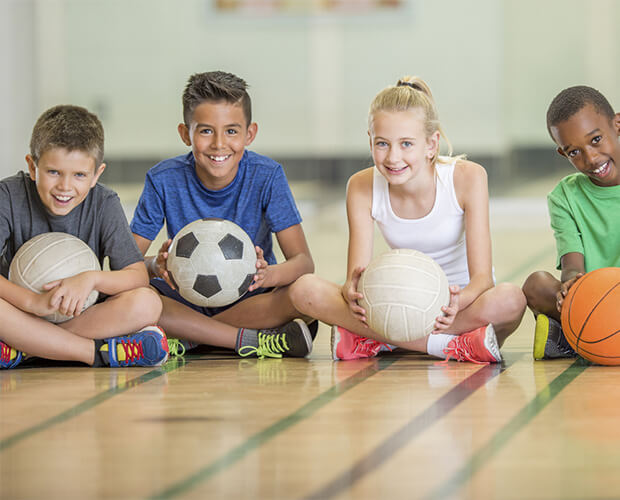
Within the current Welsh curriculum as of 2015, there are seven areas of learning, and one of them is ’Physical Development’. The curriculum aim is to maintain and improve a child’s well-being using sport and activities throughout their educational lifetime. According to the Welsh curriculum (2005), physical education will improve a child’s well-being overall; developing different abilities and learning new skills. Throughout a child’s educational lifetime, they will be introduced to new concepts which they are often unfamiliar with such as; health hygiene, safety, the importance of diet, rest, sleep and exercise. Physical education should encourage and promote physical activity, in result, this love for activities will develop a sense of identity which builds a child’s confidence and self-esteem.
According to Solomon (2015), there are multiple benefits associated to physical education in relation to health and well-being. The possible physical benefits of physical education and participation are a decreased risk of the following; cardiovascular diseases, types of cancer and type two diabetes. The mental health benefits are as follows; improved quality of life and knowledge of how to maintain a healthy lifestyle. Although the benefits of physical education are vast, P.E teachers often face various issues. The issues teachers face range from a lack of facilities and equipment along with class sizes which are too large. However, according to Eccles benefits of physical education can not be met unless four areas are addressed. Eccles expectancy-value model outlines four elements of value. The first being intrinsic value, the learner's interest in the activity. The second element is attainment value, the learner’s perception of doing well. The third element is utility, the usefulness of said activity. Finally, the last element is the perceived cost which is the learner weighing up the benefits against the investment. In result, if children do not have a reason for engaging they will often avoid it or perform badly as they are not invested. (Solomon, 2015)
According to the Department of Health (2013), physical activity in and out of physical education classes is vital for a child’s foundation of a healthy balanced lifestyle. However, only around 20% of children in the U.K participate in more than an hour of moderate-vigorous physical activity per day, which places the UK 10th out of 29 OECD countries. Even though there are multiple benefits to physical education the Department for Health acknowledges that there are risk factors identified within physical education. Two of the major factors associated with lower levels of well-being are bullying and negative social interactions. Children who are bullied and the children who conduct the bullying are both not happy. Children who are disruptive and misbehaving in classes also have lower levels of well-being. (Department of Health, 2013)
In my own experience, while conducting placement in Georgetown Primary, the focus on physical education is having fun rather than winning. When I was in school, the focus was on competition being the best and winning was the only result. However, during my placement, I found that children are encouraged to enjoy sport and activities which in result will create a positive atmosphere where everyone feels included and each child is having fun.
The current Welsh curriculum is soon to be changing over the coming years with Professor Graham Donaldson new curriculum coming in to effect. Within Donaldson’s recommendations in ‘Successful Futures’, one of the distinctive purposes of the new Welsh curriculum is “the health and well-being of our children and young people.” (Donaldson, 2015, p.24) This is an example that health and well-being is branching from a subject in physical education to its own topic throughout multiple subjects. Donaldson believes that all children should have healthy minds and bodies, as schools should promote positive attitudes in relation to mental and physical well-being. Health and well-being is one of the six ‘Areas of Leaning and Experience’. Children will be taught and assisted on how to become ‘healthy’ as they will develop their knowledge on how to maintain a healthy lifestyle, developing reliance, empathy and confidence. (Donaldson, 2015)
In summary, physical education is a vital subject in education as it does promote well-being. Although there are many perceived negatives like bullying, the benefits clearly outweigh them. For children, physical education distinctively creates a foundation for children to live a healthy balanced lifestyle for the rest of their lives.
The next blog is going to discuss how science and technology activities can be made engaging and relevant in primary education?
Reference List:
Department for Education and Skills (2015) Curriculum for Wales: Foundation Phase Framework. Cardiff: Welsh Government, Available at: http://learning.gov.wales/docs/learningwales/publications/150803-fp-framework-en.pdf (Accessed: 13 February 2018).
Department of Health (2013) How healthy behaviour supports children's wellbeing. London: Public Health England. Available at: https://assets.publishing.service.gov.uk/government/uploads/system/uploads/attachment_data/file/232978/Smart_Restart_280813_web.pdf (Accessed: 2 April 2018)
Donaldson, G. (2015). Successful futures: Independent review of curriculum and assessment arrangements in Wales. Welsh Government.
Solomon, M. (2015) 'Optimizing the Role of Physical Education in Promoting Physical Activity: A Social-Ecological Approach', Research Quarterly for Exercise and Sport, 86(4), pp.329-337.


Hi Rhys,
ReplyDeleteI really enjoyed reading your blog! You spoke about how there is only 20% of children in the UK who participate in more than an hour of physical exercise a day. This is quite low and something definitely needs to be done to improve fitness in schools. Which you have noted in your blog within the Donaldson’s new curriculum, where more emphasis is made on keeping fit to promote their well-being and health. However, you mentioned how lower levels of well-being are associated with physical education through bullying and negative social interactions. Yet Burdette and Whitaker (2005) note how physical education leads to benefits beyond health, which include improvements in social relationships and emotional well-being. Children are able to meet and socialise with others which can have a positive impact on their well-being as they have the opportunity to make new friends in a new environment whilst being active. Lu and Buchanan (2014) also agree with this by highlighting how socialising with others can benefit children as emotions are shared. Has this changed your opinion?
Reference List
Burdette, L. and Whitaker, C. (2005) Resurrecting free play in young children. Archive of Pediatric and Adolescent Medicine, 159(3) pp. 46-50.
Lu, C. and Buchanan, A. (2014) 'Developing students emotional well-being in physical education ', Journal of physical education, 85(4), pp. 28-33
ReplyDeleteMy opinion can always be changed with different aspects being taken in to account. As mentioned briefly earlier Chelsea, the psychological benefits of physical education are vast. To go in to more detail, children when interacting with one another have the benefits of making new friends, gaining self-confidence and their self esteem. (Solomon, 2015) According to Rochelle Eime (2013), team sports are the key in improving a Childs health overall impacting psychological, physiological and social health. Specifically social health is a major impact as there is a team consensus where each person looks out for one another, which in result builds friendship bridges out of sport as these children interact with one another outside of their extra-curricular activity. Although taking these points in to account I still believe that physical education mostly impacts a child physically more than psychological and socially.
Eime, R. et al. (2013) 'A systematic review of the psychological and social benefits of participation in sport for children and adolescents: informing development of a conceptual model of health through sport', International Journal of Behavioural Nutrition and Physical Activity.10(98), No page number.
Solomon, M. (2015) 'Optimizing the Role of Physical Education in Promoting Physical Activity: A Social-Ecological Approach', Research Quarterly for Exercise and Sport, 86(4), pp.329-337.
Thank you for the reply Rhys,
ReplyDeleteI agree with your point to some degree that physical education mostly impacts a child physically more than psychologically and socially. However, I strongly believe it is dependant on the child as each child is different and it will impact their fitness and well-being in different ways.